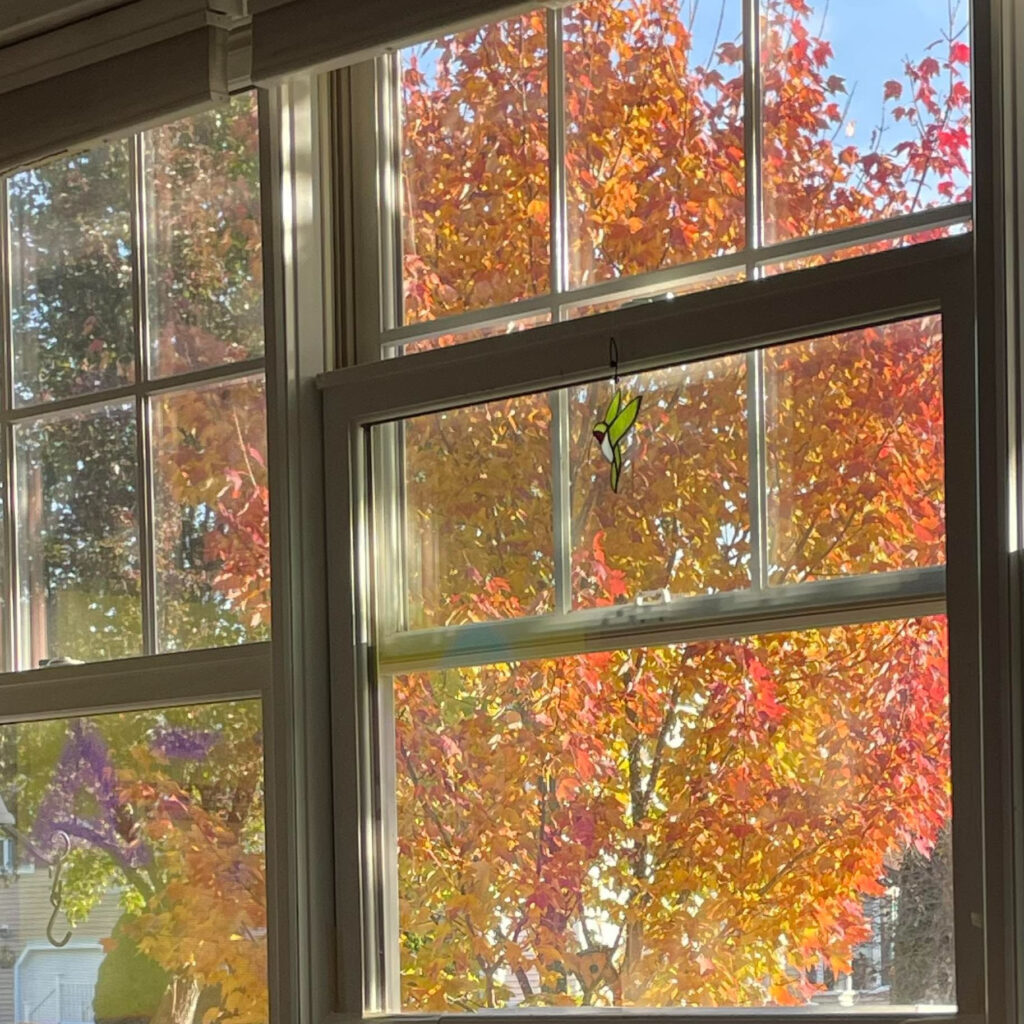
I’d like you to meet Branchy*. In my family, we use Branchy as a marker of time- she loses her leaves last and buds out early, marking the beginning and end of the warm months. We add lights to her in the winter and note how much harder it is to reach the upper branches, and we celebrated the first time a family of birds built a nest in her branches.
Branchy is losing the last of her leaves, and I’m thinking of fall. Or more appropriately, falling. Things fall, you know? It’s one of the earliest physics lessons we learn. Literally and metaphorically speaking, things fall. We fall in love, fall all over ourselves, things fall into place, and fall apart. If we’re lucky enough to be in one place long enough to notice them, patterns emerge. We start to recognize what happens just before they fall into place, what factors tend to lead them to fall apart.
Researchers call that transcendent thinking— “analyzing situations for their deeper meaning, historical contexts, civic significance and/or underlying ideas. (It) might take the form of recalling personal experiences, reflecting on one’s beliefs and values and experiencing feelings of compassion and gratitude.”
In the Critical Skills Classroom, we’ve called it “reflect and connect” for the last 40 years. It’s the moment when we intentionally connect past learning and recent experiences to future experiences and opportunities (both theoretical and practical, unexpected and predictable). We’ve always known it worked, but now we understand a bit more about why. (Essentially, when teens are asked to reflect regularly about experiences that matter to them, there are significant positive impacts on identity development and brain structure. Kids need to explore complex perspectives on experiences and ideas that reflect their own lives.)
We know that reflection isn’t easy to build into the day- it’s an easy thing to skip- and it’s not something we’re typically reminded to do. This month, I’m sharing resources on reflection, including Reflection: A Process for Making Meaning, a free excerpt from The Complete Guide to the Critical Skills Classroom.
Reflection is always a good idea, but it’s particularly useful when it comes on the heels of less-than-successful experiences. According to Cathleen Beachboard “reflection sharpens the sense of a new chapter, making (us) more likely to act on (our) goals.” Failure- falling- can magnify the power of our experiences, if we let it.
No matter what you’re falling into right now, I’m glad to know you and hope you’ll reach out if there’s anything we can do to make your landing a little easier.
Best-
(*The name came from a tree study my daughter did in elementary school and even though she finished that project roughly 15 years ago, the name- and the observation habit- stuck. You can learn more about that at K-5 Forest Lessons — Green Schoolyards America)
Sign up for Connections: Tools, News, and Inspiration for Teachers Like You and receive these little letters (plus a lot more) straight to your inbox every month!